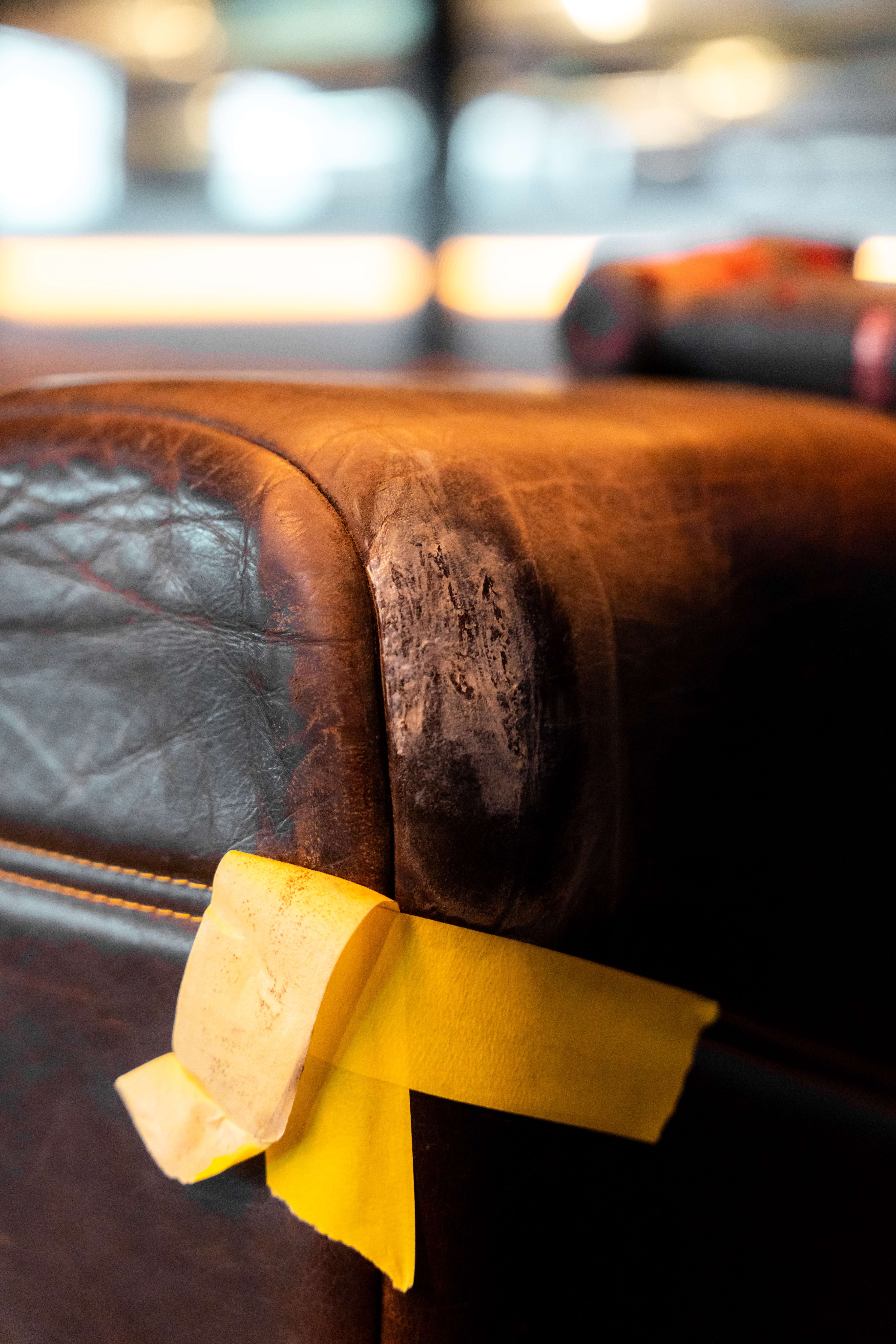
The real cost of a refit is the days you are shut.
A venue that closes for a refit loses trade every day it is dark, and the fitout bill runs from tens of thousands into the hundreds of thousands. We restore the seating and surfaces you already have, overnight, section by section. You open as normal the next morning.
Four things to put in front of whoever signs it off
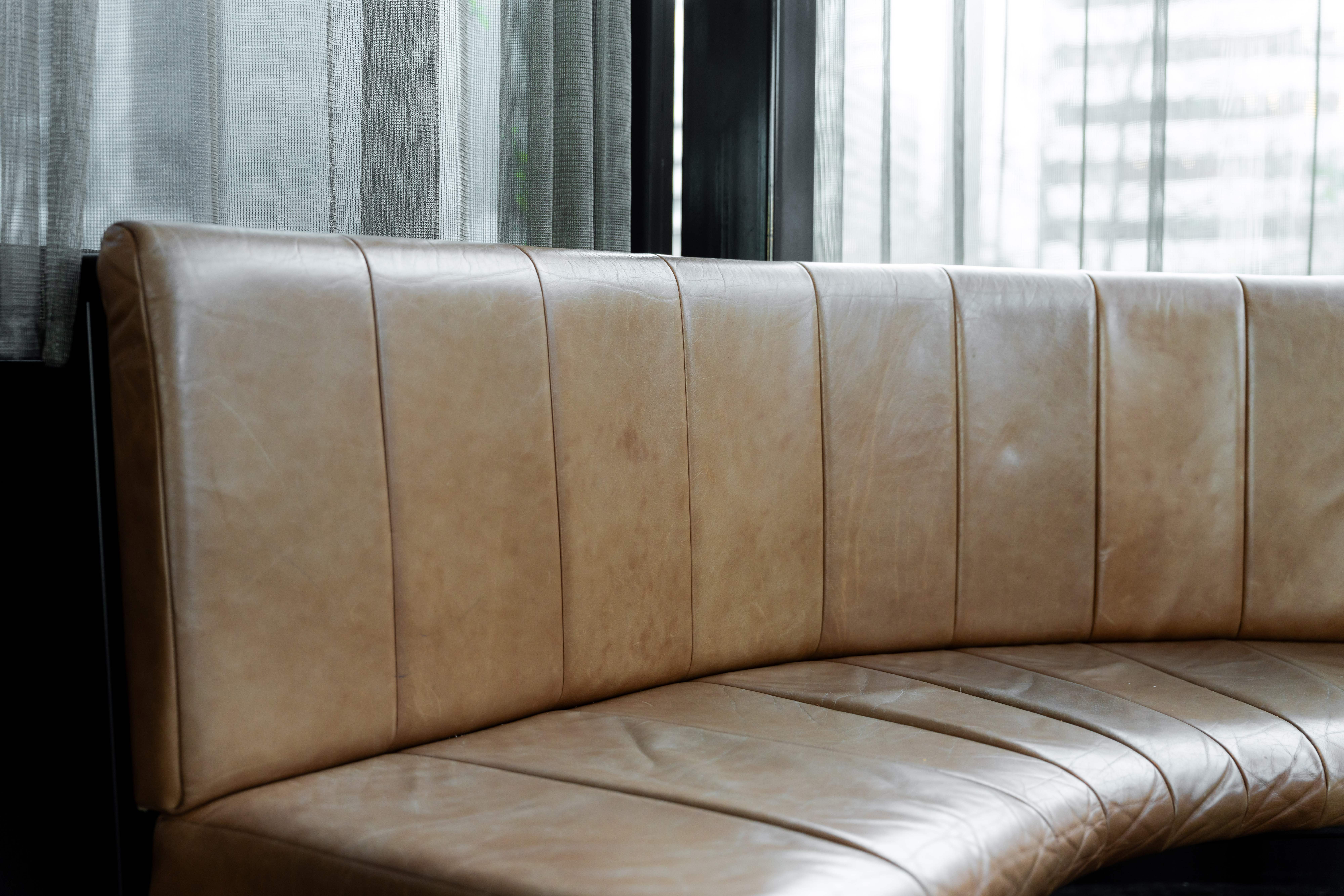
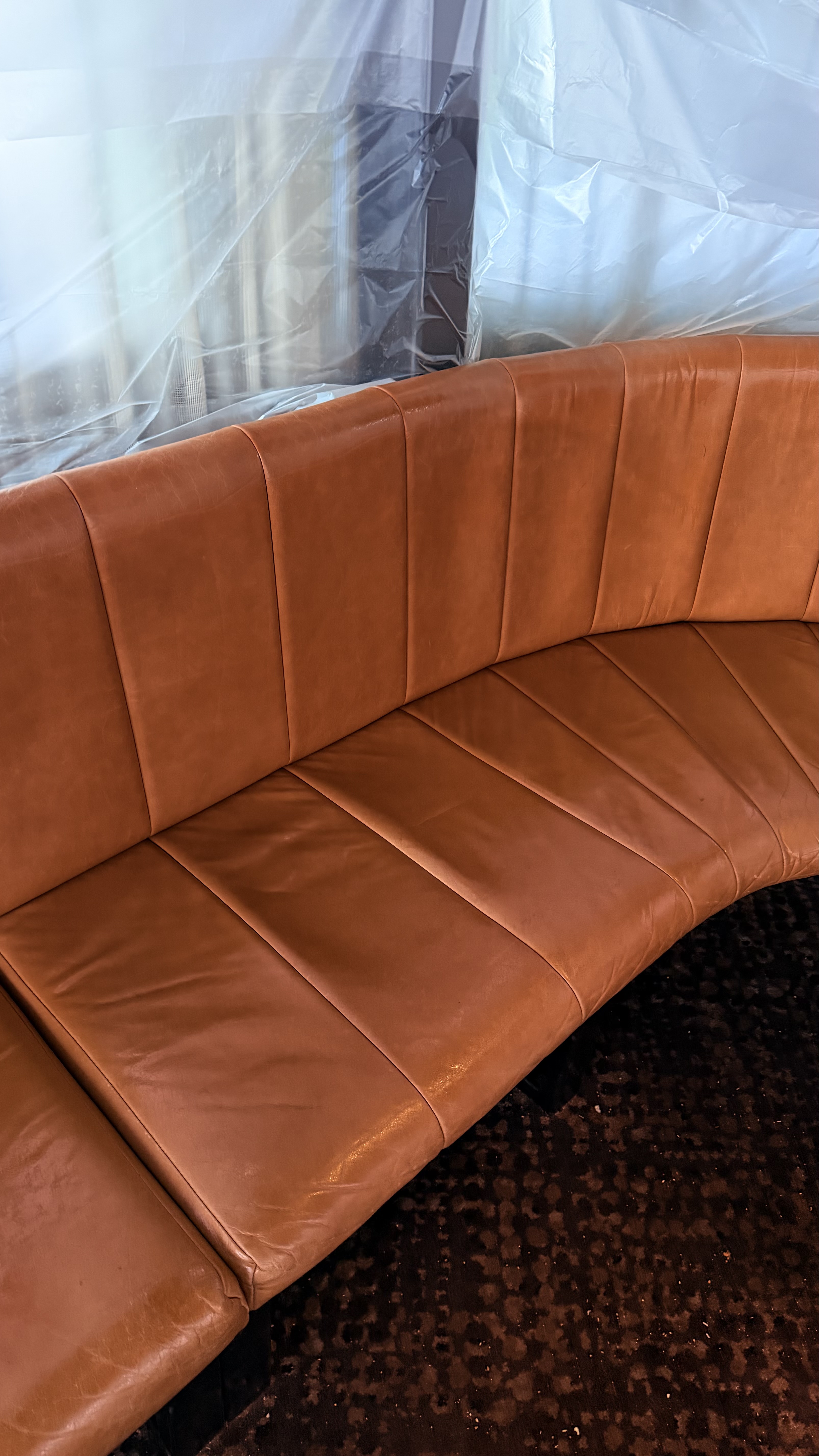
Channel back banquette restored on site and back in service
Point 1
Closure is the cost, not the invoice
Replacing a fitout means shutting the room. Every day the doors are closed you lose the takings, the wages still run and the regulars find somewhere else. The fitout bill itself runs from tens of thousands into the hundreds of thousands before you count a single lost cover.
Point 2
We work around the venue, not through it
Overnight and early morning shifts, one section at a time. We arrive after close, work a defined area, and hand it back cured and ready before service. The venue trades as normal the next day. No closure required.
Point 3
A fraction of the cost of replacing
Restoration repairs and recolours the leather and vinyl you already own. There is no new furniture, no freight, no installers and no disposal. You get years of additional life out of the existing fitout for a fraction of what replacing it would cost.
Point 4
It defers the capital spend
A refit is a capital item. Restoration comes out of maintenance. Pushing the refit back a few years matters at budget time, and it gives you the option to replace on your schedule rather than when the seating forces the decision.
Start with a site walk through
We count the pieces, photograph the damage and give you a written scope and a shift by shift schedule. No obligation, and it takes less than an hour of your time.
Commercial leather and vinyl restoration for hospitality venues
Each service below says what it fixes and what it looks like when it is done. All of it is carried out on site, outside trading hours.
Banquette and booth seating restoration
What it fixes
Cracked and peeling seat pads, worn colour along the front edge where people slide in and out, scuffed backrests and faded panels under the lights. The heavy wear points on fixed seating.
What it looks like done
The banquette reads as one continuous, even colour again. Repairs are grain matched and recoloured so no individual patch stands out. The finish is sealed for trade use.
Dining chair and bar stool restoration
What it fixes
Worn seat tops, scuffed edges from being dragged and stacked, cracked vinyl on stool pads and colour worn off the backrest where hands rest. Chairs are done in batches so the room is never short of seating.
What it looks like done
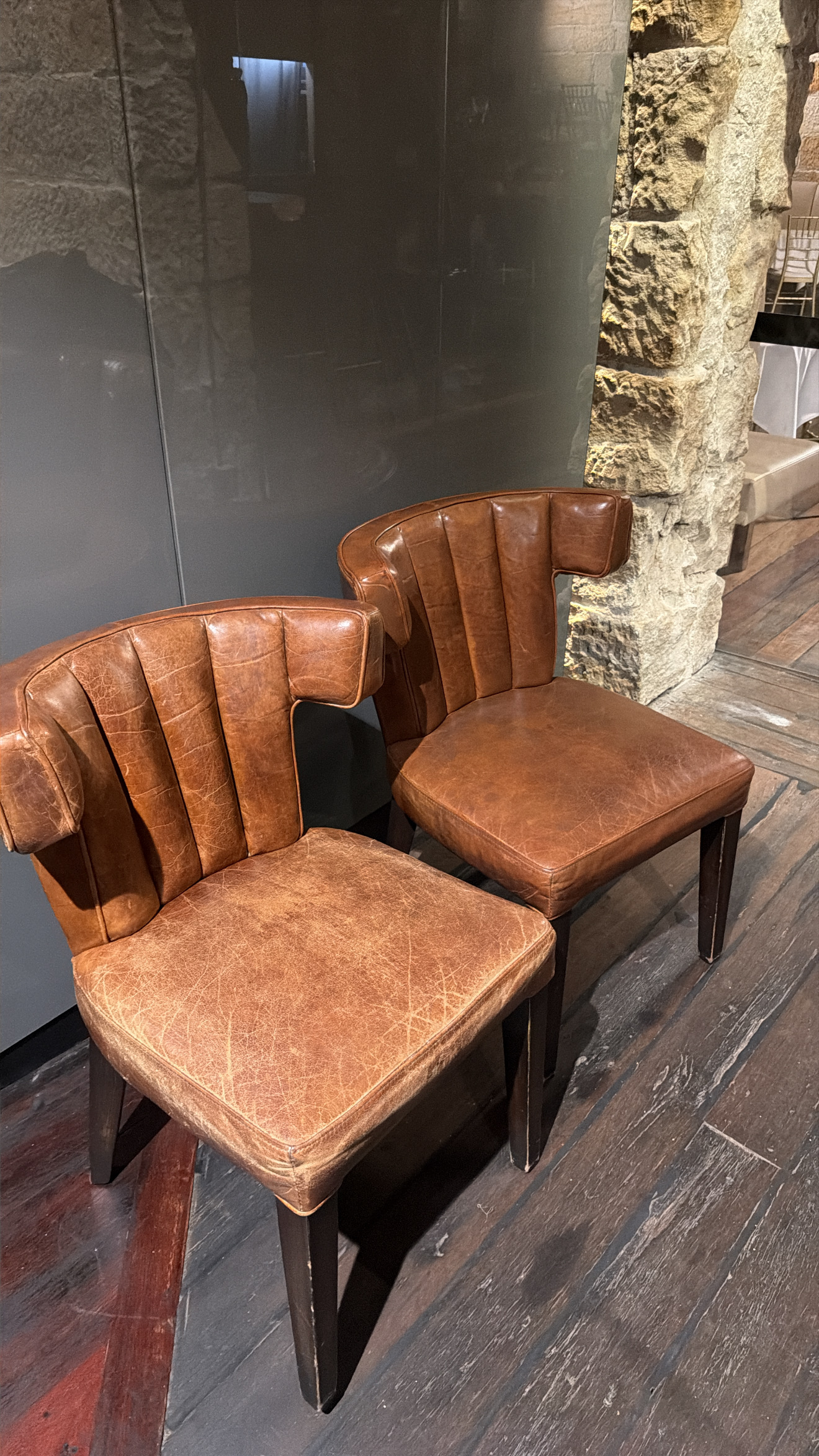
Chairs and stools match each other again. Repaired seats carry the same colour and texture as the rest of the set, so mixed batches from different years look like one order.
Scuff, tear and burn repair
What it fixes
Cigarette burns, knife and key scuffs, split seams where the vinyl has torn, gouges from furniture and trolleys. The damage that makes a venue look tired long before the seating is actually worn out.
What it looks like done
Each repair is filled, grained and colour matched to the surrounding material. Under normal lighting the repair is not the first thing a customer sees. You are told in advance if a repair will still show.
Clean, condition and protect
What it fixes
Ingrained grime, body oils, spilt drinks and cleaning product residue that dull the finish and dry the material out. Dry leather cracks. Grimy vinyl looks older than it is.
What it looks like done
Seating is cleaned back to its true colour, conditioned so the leather stays supple, and sealed with a protective coat that resists stains and makes routine cleaning easier for your staff.
Ongoing maintenance programme
What it fixes
Small damage that turns into big damage. A single scuff or split, left for a year of trade, becomes a seat pad that has to be rebuilt. Regular visits catch it early.
What it looks like done
A scheduled visit, outside trading hours, at an interval that suits your venue. Fresh damage is repaired, the finish is refreshed and the protective coat is renewed. The fitout stays in condition and the next refit moves further out again.
Before and after
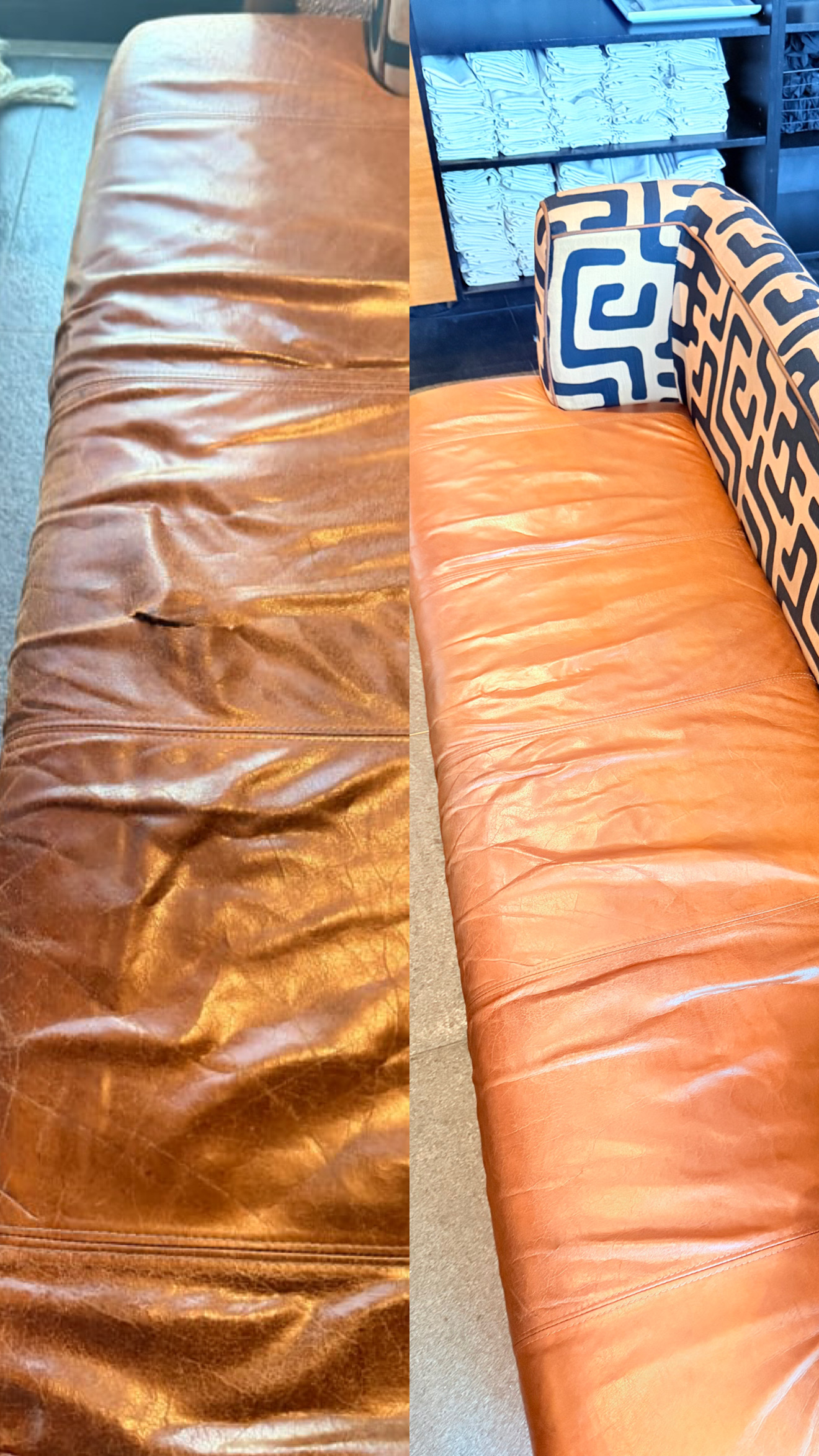
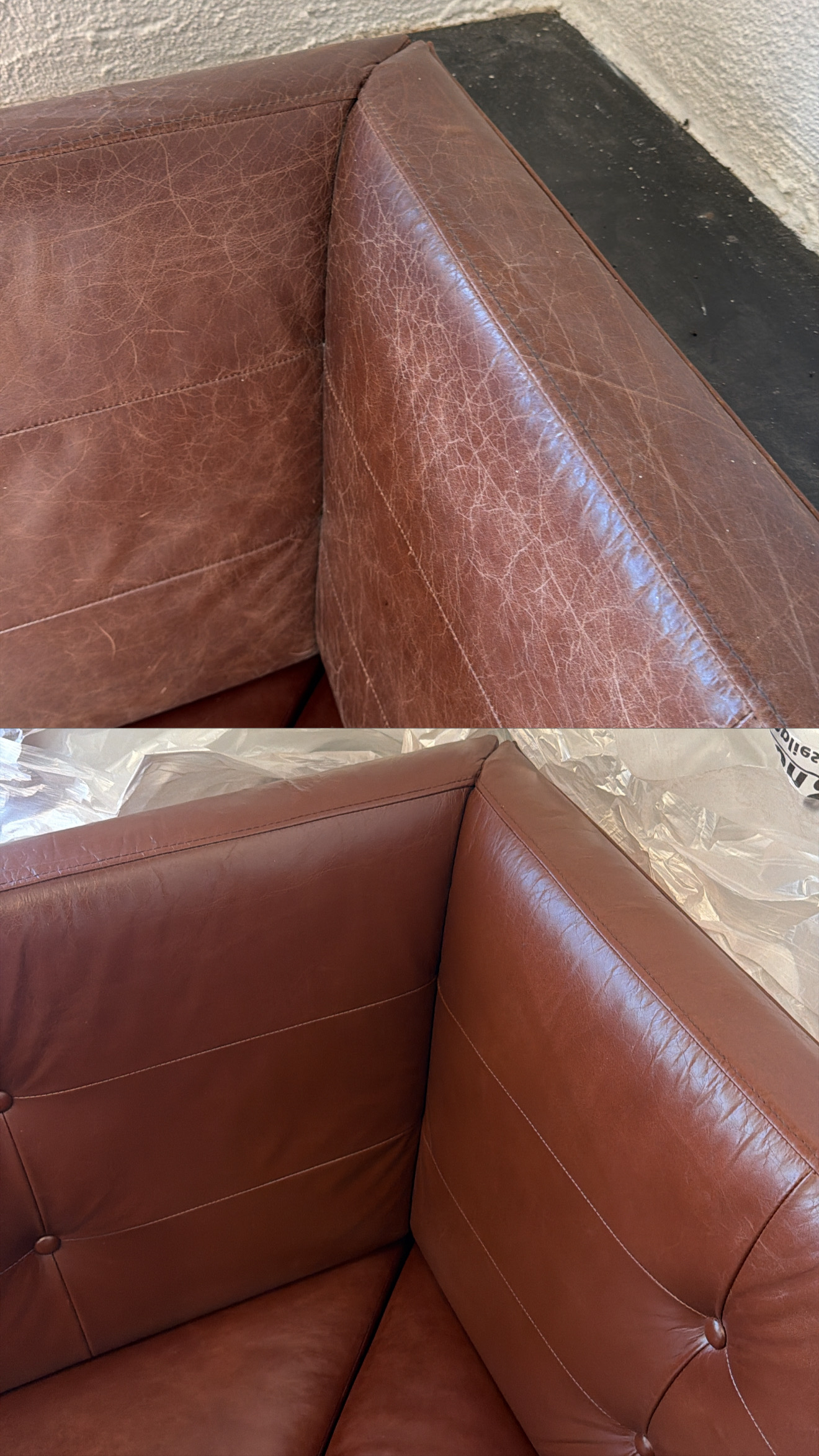
Bench seat. Before: torn and worn through. After: repaired and recoloured to an even finishLounge corner. Before: dried out and scratched. After: conditioned, recoloured and sealedDining chairs. Front: as found. Behind: restored. Done in batches so the room keeps its seating
How the work is scheduled
Planned around service, signed off every morning
1
Site assessment
We walk the venue with you, count and photograph every piece, note the damage and the wear points, and confirm what can be restored and what cannot. You get a written scope and a schedule, not a guess.
2
Section by section staging
The room is broken into sections that can be closed off during a shift without taking seating out of service. Each section is masked, prepared, repaired, coloured and sealed before we move to the next.
3
Overnight and pre open shifts
We work after close and before open. Product cure times are planned around your first service, so nothing is tacky or fresh when staff set up. If you have a quiet trading day we can use that too.
4
Sign off each morning
Each section is inspected with your manager or duty supervisor before we leave. Anything that needs another pass is noted and done on the next shift. You always know what has been done and what is next.
Masked and prepared: the damaged area is isolated before filling and colour workThe room around the work is sheeted off. The banquette is finished, the venue is untouchedAfter close: the kit comes in, the work is done and the room is handed back before open
After the restoration
Keep it in condition and push the refit out again
Restoration resets the clock. Maintenance stops it running down again. Once the seating is restored, a scheduled maintenance visit keeps the finish sealed, catches fresh damage while it is still small and keeps the venue looking like it was fitted out recently.
Scheduled visits at an interval set to your trade, outside trading hours
Fresh scuffs, tears and burns repaired before they spread
Protective coat renewed so spills and cleaning products do not dull the finish
A condition report after each visit for your maintenance file
One supplier who already knows your venue, your colours and your access arrangements
Treat it as an ongoing arrangement rather than a one off. The venues that stay on a programme are the ones that get the most years between refits.
Multi site and interstate
One supplier, consistent results across every venue
We travel for larger jobs and work across states. A group with venues in more than one city can put the whole portfolio with one supplier and get the same colour match, the same finish and the same scheduling approach at every site. Colour recipes are recorded per venue so a repair in one city matches the seating in another.
Site assessments across multiple venues scheduled in one trip
Colour recipes recorded per venue and per seating type for repeat visits
Overnight staging repeated at each site so no venue closes
A single point of contact for the group rather than a different trade in each city
An honest limit
When replacing is the right call
Not everything can be saved, and we will tell you when it cannot. Restoration works on the surface. It does not fix a broken frame or bring back material that has failed all the way through.
Frames that are broken, loose or rotten. We restore the covering, not the structure.
Foam that has collapsed so the seat has no support left. Recovering the surface does not fix the comfort.
Material that is brittle and cracking across the whole piece rather than at the wear points. It will keep splitting after it is coloured.
Vinyl where the top layer has delaminated from the backing over a large area.
If part of the fitout is past saving we will say so at the site assessment and scope the rest. Often the answer is to replace a handful of pieces and restore everything else, which still keeps the venue open.
Track record
Work completed, by category
We do not name venues on this page without written consent. The categories below describe completed commercial work.
Restaurants and bars
Banquette, booth, dining chair and bar stool restoration completed overnight with the venue trading the next day.
Hotels
Seating restoration in hotel dining, bar and lounge areas, scheduled around guest hours.
Clubs and hospitality groups
Restoration and maintenance work for clubs and for groups operating more than one venue.
Interstate jobs completed
Commercial restoration work completed outside Western Australia for venues in other states.
Questions procurement and operations ask
Do we have to close?
No. We work overnight and before open, one section at a time, and hand each section back ready for service. The venue trades as normal the next day. No closure required.
How long does it take?
It depends on the number of pieces, the amount of damage and how many hours we have between close and open each night. We break the job into sections and give you a shift by shift schedule after the site walk through, so you know exactly which area is being worked on each night.
How much cheaper is it than replacing?
Restoration costs a fraction of replacing the fitout. There is no new furniture, no freight, no installers, no disposal and no lost trading days. The exact figure depends on the number of pieces and their condition, so we quote from the site assessment rather than give a generic number.
How many more years will we get?
That depends on the material, how hard the venue trades and whether the seating is kept on a maintenance programme. We give you a straight answer for your venue at the site walk through once we have seen the condition of the seating. Restored seating on a maintenance programme lasts longest.
Do you work interstate?
Yes. We travel for larger jobs and work across states. Groups with venues in more than one city can use one supplier and get consistent results at every site.
Do you carry insurance?
Yes. We carry public liability insurance to $20 million. A certificate of currency is available on request for your contractor file.
Can you work around our trading hours?
Yes. That is how every commercial job is planned. We work after close and before open, and we plan cure times around your first service. If you have a quiet trading day or a closed day we can use that as well.
What happens if something cannot be saved?
We tell you at the site assessment. Broken frames, collapsed foam and material that has failed all the way through cannot be restored, and we will say so rather than colour over a problem. Usually the answer is to replace a small number of pieces and restore the rest.
We come to you, count the pieces, photograph the damage and give you a written scope and a shift by shift schedule. No obligation. If you would rather talk first, call (08) 6328 1120.
Written scope with what can and cannot be restored
Shift by shift schedule around your trading hours
Certificate of currency on request
Keep the doors open. Fix the seating anyway.
Commercial leather and vinyl restoration in Perth, and interstate for larger jobs. Overnight, section by section, no closure required.